8K Capture Technology: The Next Frontier in Video Recording
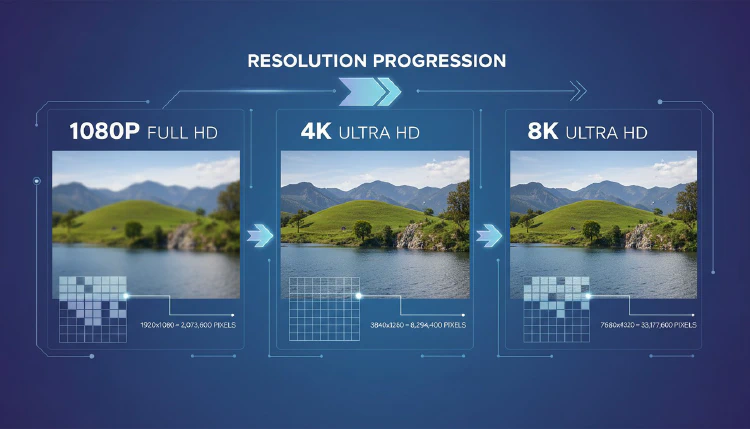
While 4K capture has become mainstream, the video industry is already looking ahead to 8K. With 33 million pixels per frame — four times the resolution of 4K and sixteen times that of 1080p — 8K represents the next major leap in video quality. And the technology to capture it is advancing faster than many expected.
8K Camera Sensors: The Foundation
The 8K capture ecosystem begins with sensors capable of producing 8K resolution video.
Y.M.Cinema Magazine reports that Sony has developed a new mobile sensor that delivers 8K video recording with an impressive 17 stops of dynamic range. Meanwhile, OmniVision’s OV50X 1-inch sensor, now in mass production, brings 8K recording and 18 stops of HDR to flagship smartphones using a hybrid HDR system that captures within a single frame.
These sensor advances mean 8K video sources are becoming more common, creating demand for 8K-capable capture and recording solutions.
Professional 8K Capture Cards
The capture card industry has responded with professional-grade 8K solutions:
Blackmagic DeckLink 8K Pro G2
The DeckLink 8K Pro G2 features HDMI 2.1 and four 12G-SDI connections, supporting capture and playback at up to 8K@60fps. It’s designed for professional broadcast and post-production environments where 8K workflow support is essential.
YUAN SC750N1-L
YUAN’s PCIe 3.0 x8 capture card offers HDMI 2.1 input and output with 8K@60fps recording capability, bridging the gap between professional and prosumer markets.
8K in Professional Cinema
Several professional cinema cameras now shoot in 8K or higher:
- Canon EOS R5: Internal 8K RAW recording
- Nikon Z9: Internal 8K@60p and 4K@120p recording with no time limits
- Blackmagic URSA Mini Pro 12K: 79.6-megapixel sensor shooting up to 12K resolution
These cameras generate 8K footage that needs to be ingested into post-production workflows, driving demand for 8K-capable capture cards and recording solutions.
8K in Consumer Devices
8K is also reaching consumer devices:
- Insta360 X4: Records 8K@30fps 360-degree video using a 5nm AI chip
- Smartphones: Multiple flagship phones now offer 8K video recording
- Action cameras: New entrants like Leaptic are bringing 8K to the action camera segment
The Challenges of 8K Capture
Despite the advances, 8K capture faces significant practical challenges:
Bandwidth Requirements
8K@60fps uncompressed requires approximately 48 Gbps — the exact bandwidth limit of HDMI 2.1. This leaves almost no headroom, making efficient encoding essential.
Storage Demands
8K footage generates enormous files. Even with efficient H.265 encoding, 8K@60fps can produce 100+ GB per hour of footage at professional quality levels.
Processing Power
Editing and processing 8K footage requires powerful hardware. Most consumer computers struggle with 8K timelines, making proxy workflows essential.
Display Ecosystem
8K displays remain relatively rare and expensive, limiting the audience that can view 8K content at its full resolution.
Who Needs 8K Capture Today?
Currently, 8K capture makes sense for:
- Professional filmmakers shooting for cinema and large-format displays
- Broadcast facilities future-proofing their infrastructure
- Virtual production workflows that benefit from the extra resolution for cropping and reframing
- 360-degree video creators where resolution is distributed across the entire field of view
For most content creators, 4K capture remains the practical sweet spot for the foreseeable future.
Sources: