Spatial Audio and Immersive Streaming: Apple, Dolby Atmos, and the Future of Sound
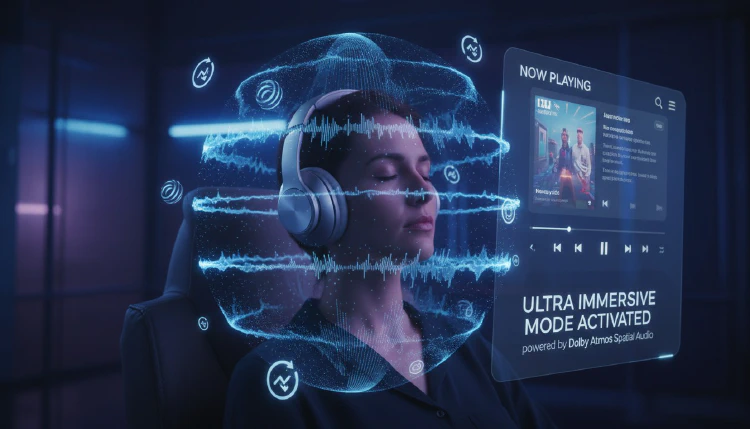
The streaming industry has long focused on improving video quality — from HD to 4K to HDR. Now, audio is having its moment. Spatial audio technologies, led by Dolby Atmos and Apple’s innovations, are fundamentally changing how we experience streamed content.
Apple’s New Spatial Audio Format (ASAF)
At WWDC 2025, Apple quietly introduced the Apple Spatial Audio Format (ASAF), a significant advancement that extends beyond Dolby Atmos. ASAF uses the Apple Positional Audio Codec (APAC) for delivery, allowing Dolby Atmos content to be wrapped within Apple’s format with additional spatial audio capabilities layered on top.
CE Critic reports that ASAF is designed to work across Apple’s entire ecosystem — tvOS, iOS, iPadOS, macOS, and visionOS — creating a unified immersive audio experience across all Apple devices.
Spatial Audio Adoption
The adoption numbers are striking. More than 90% of Apple Music listeners have tried Spatial Audio, and it now accounts for nearly one-third of all plays on the platform. This isn’t a niche feature anymore — it’s becoming how people expect to experience audio content.
How Spatial Audio Works
Apple explains that Spatial Audio takes 5.1, 7.1, and Dolby Atmos signals and applies directional audio filters, adjusting the frequencies each ear hears so that sounds can be placed virtually anywhere in a three-dimensional space. Combined with head tracking on supported devices, the audio adjusts as you move your head, creating a truly immersive experience.
Spatial Audio in Streaming
Netflix
Netflix supports Dolby Atmos on its Premium tier for select content, providing immersive surround sound for movies and series.
Apple TV+
Apple TV+ supports Spatial Audio with Dolby Atmos across its entire original content library, taking full advantage of Apple’s hardware ecosystem.
Amazon Prime Video
Prime Video supports Dolby Atmos on select titles, accessible across compatible devices.
Disney+
Disney+ offers Dolby Atmos support for many Marvel, Star Wars, and Pixar titles.
Beyond Entertainment: Automotive Integration
Spatial audio is expanding beyond personal devices. GM announced that Apple Music with Spatial Audio in Dolby Atmos is now available natively in GM vehicles, with Cadillac introducing studio-grade spatial audio that transforms the car cabin into an immersive sound environment.
Implications for Content Creators
For video and content creators, spatial audio adds a new dimension to consider:
- Recording equipment capable of capturing multi-channel audio becomes more valuable
- Editing workflows need to accommodate spatial audio mixing
- Capture devices that preserve multi-channel audio (like Dolby Atmos passthrough) gain importance
- The quality bar for audio in video content continues to rise
The Competitive Landscape
Apple’s ASAF isn’t the only player. Google and Samsung have introduced Eclipsa Audio, their own immersive audio format. This competition will drive innovation and wider adoption, ultimately benefiting consumers with more immersive streaming experiences across all platforms and devices.
Sources: